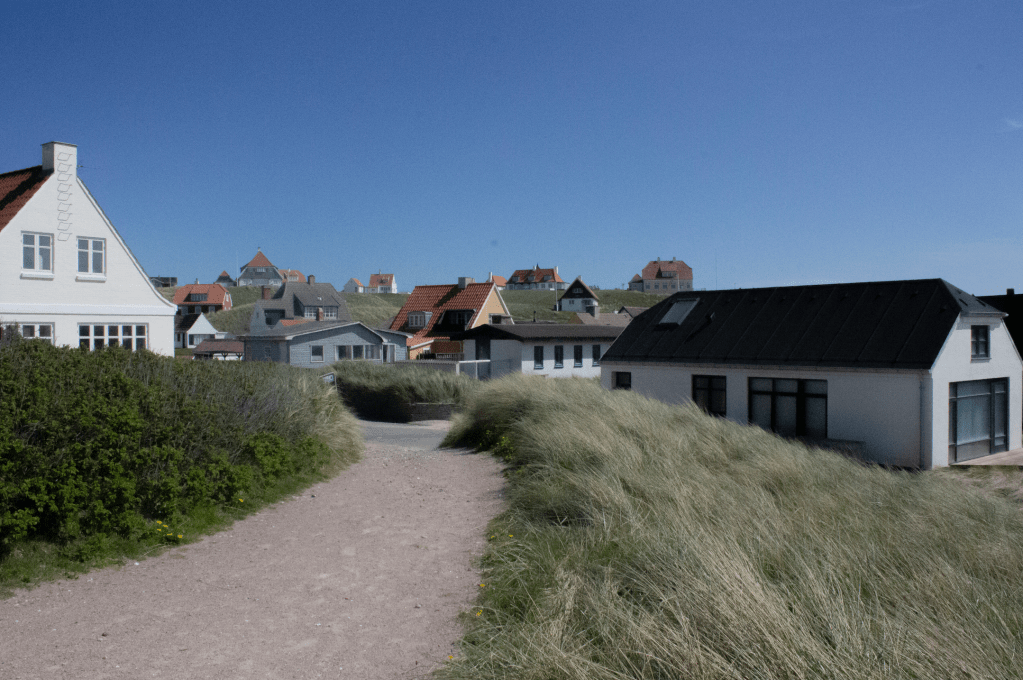
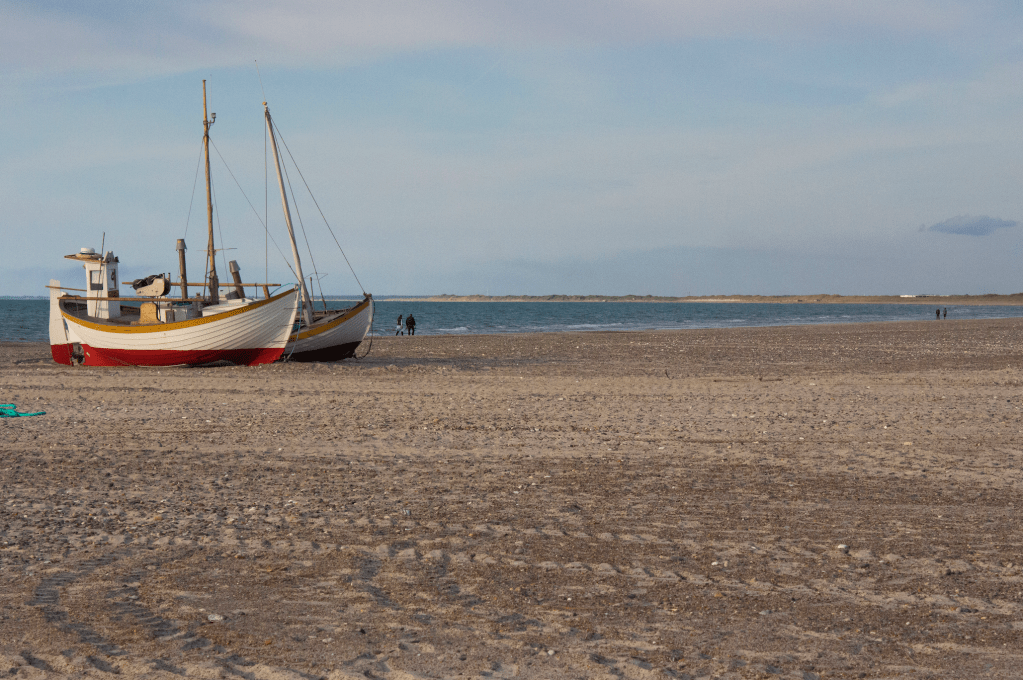
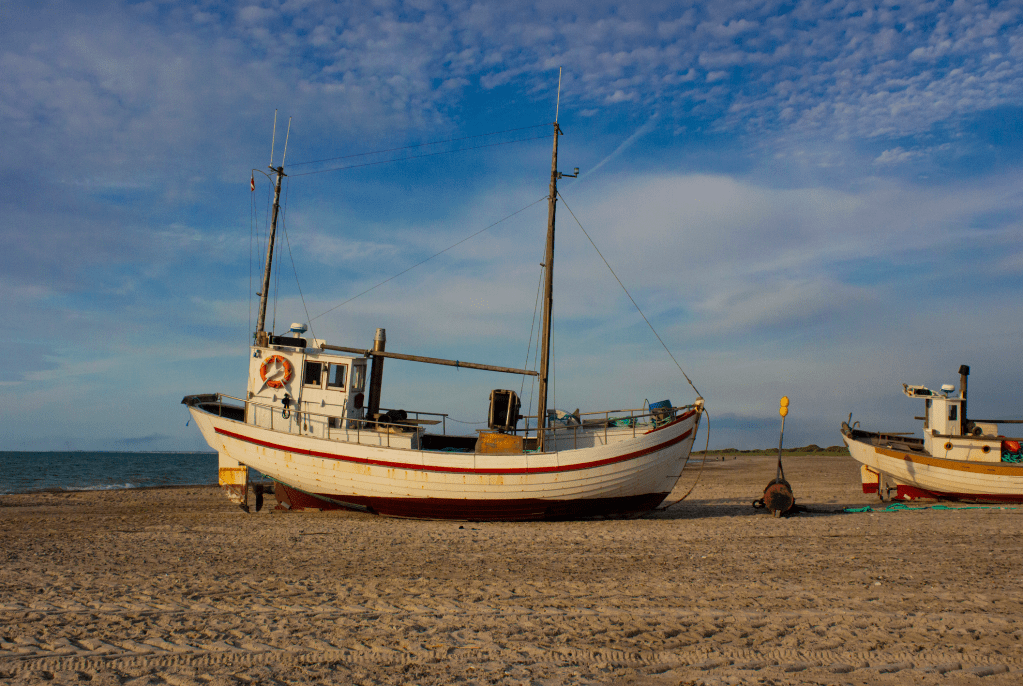
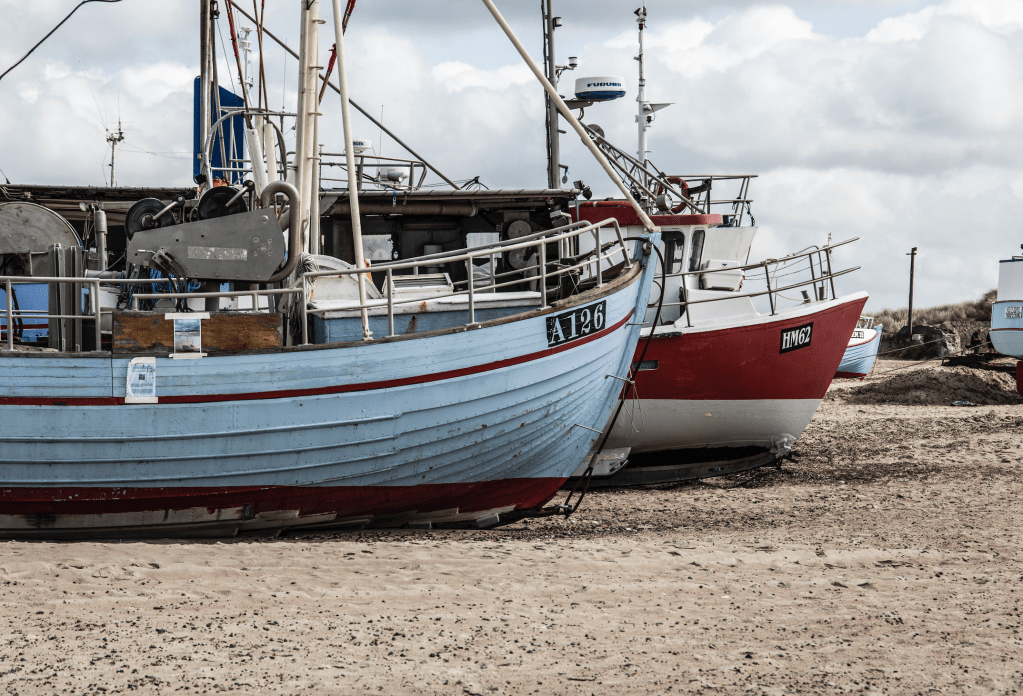
The old fishing town of Lønstrup, on Jutland´s northern tip has to be one of Denmark´s most beautiful.
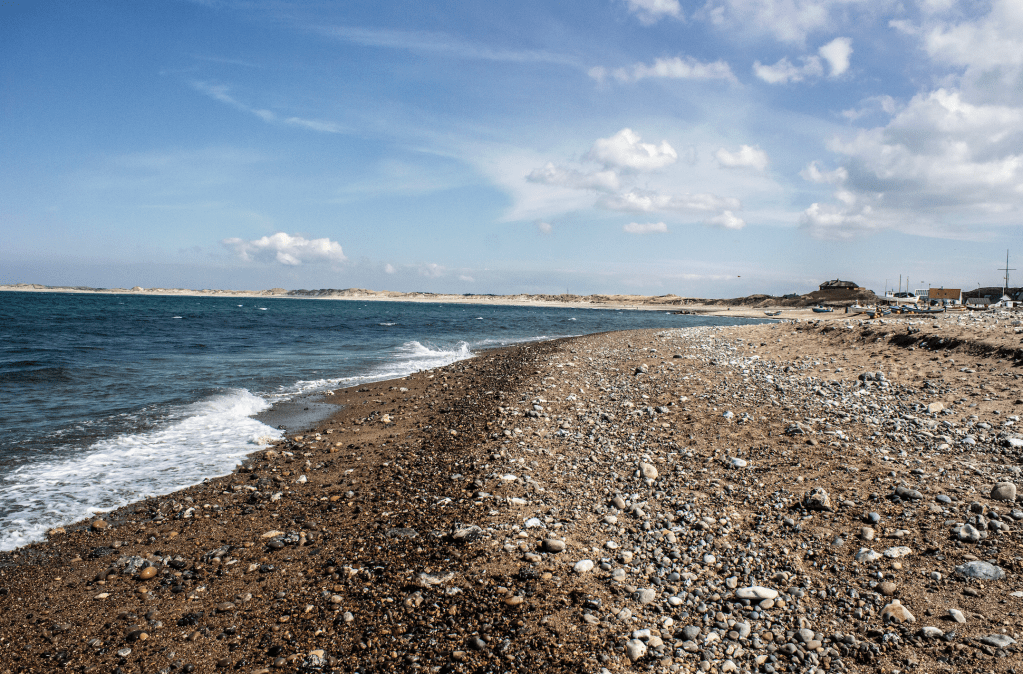
Erosion from the might north sea has made its mark in and around Lønstrup. Indeed the well-known landmark, Rudbjerg Knude Lighthouse (see my pictures from this iconic spot, here,) is located not to far away) but the town stands firm – with its quaint houses built on the hilly landscape.
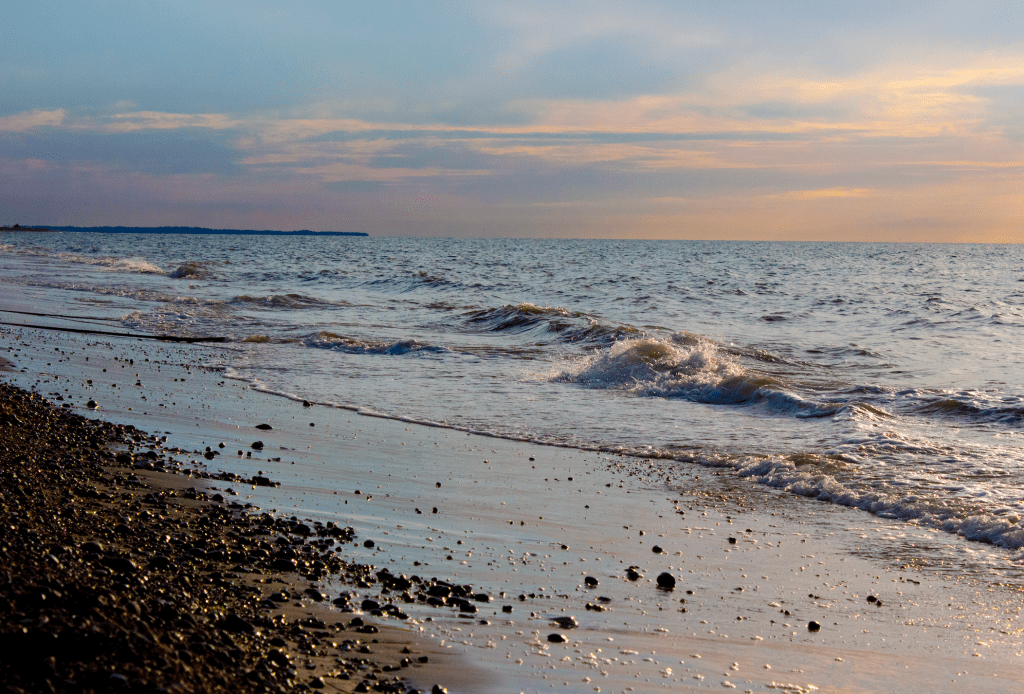
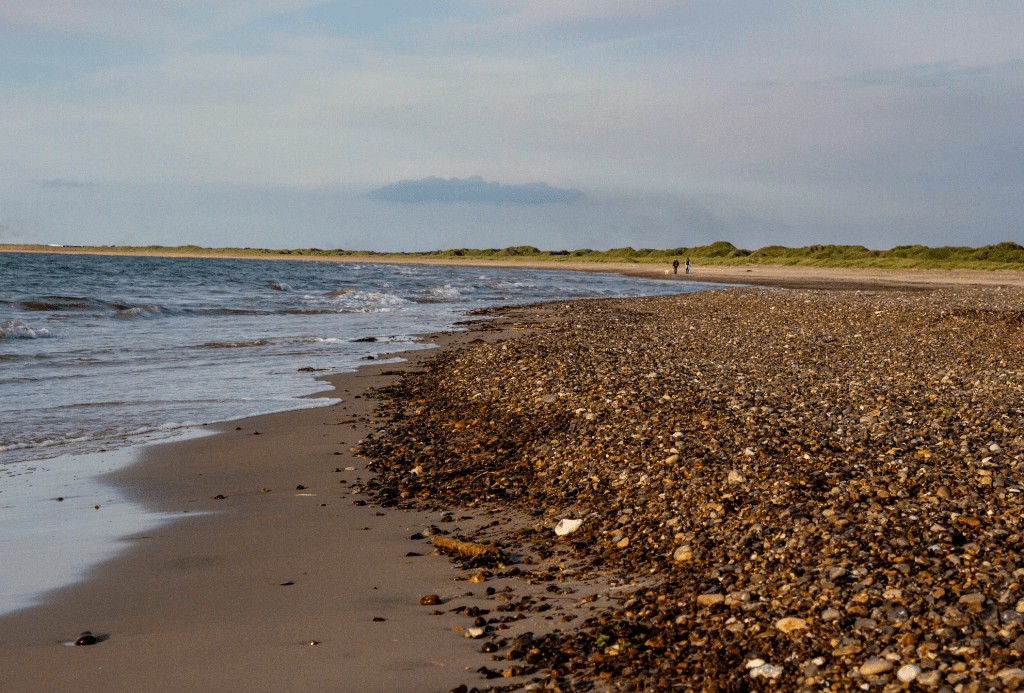
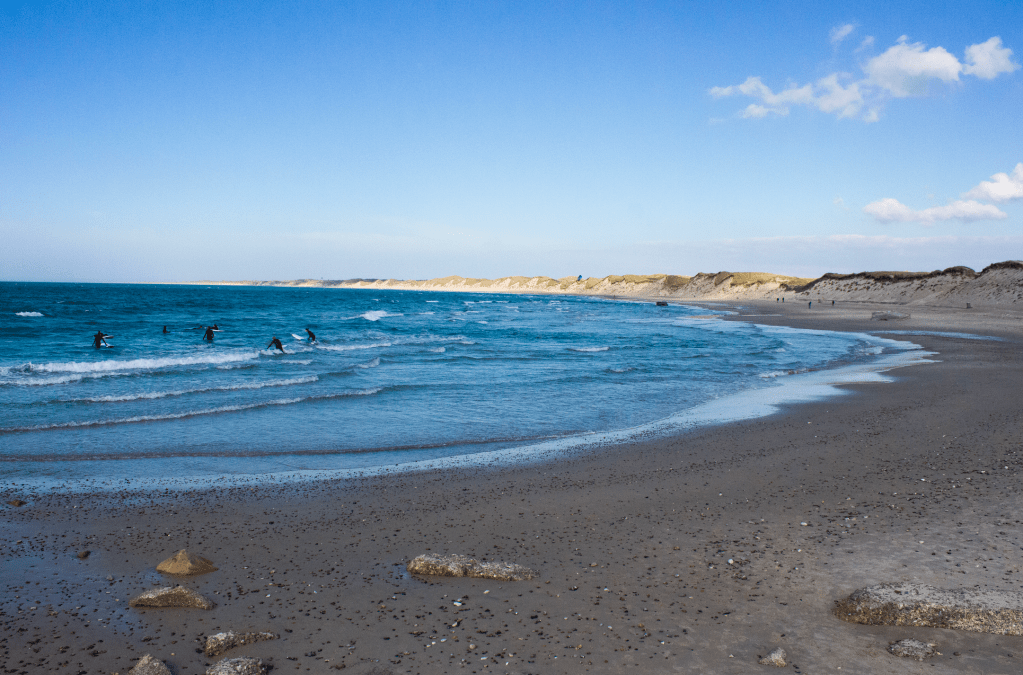
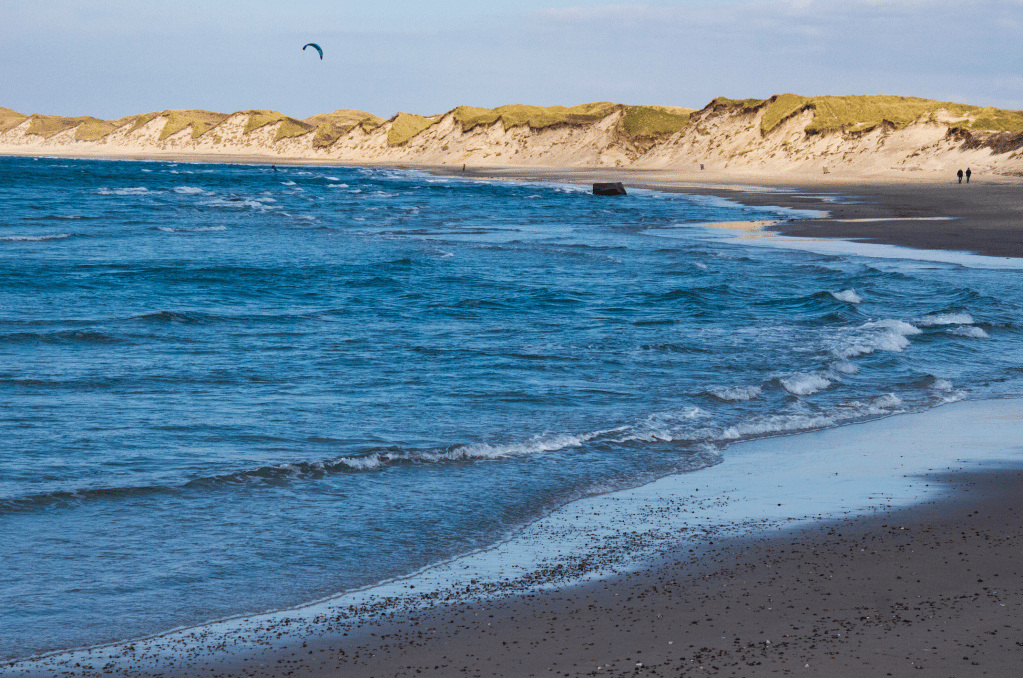
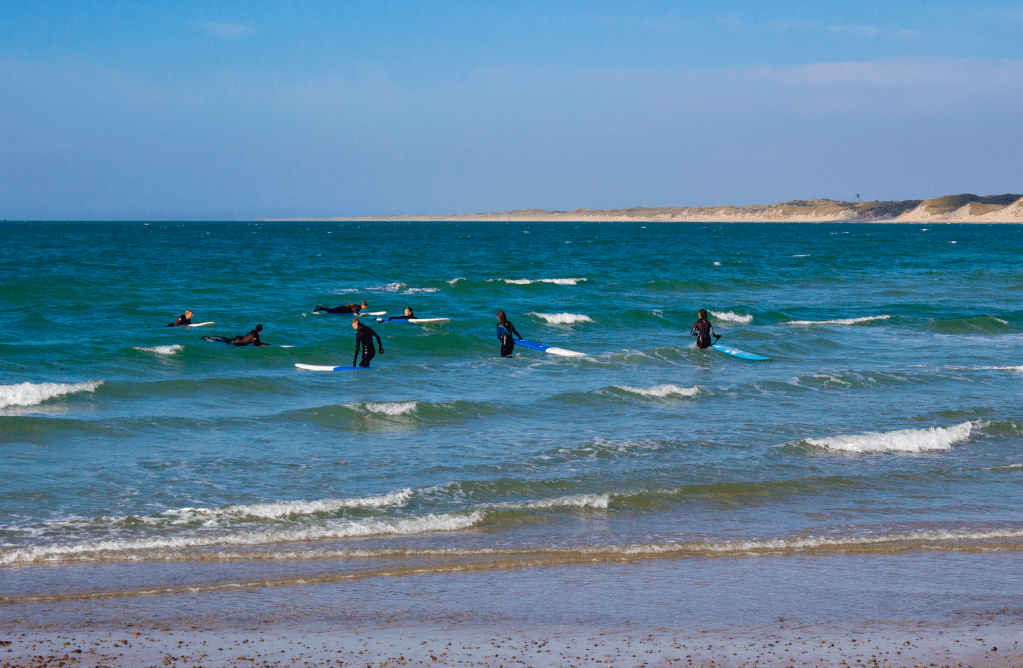
Another of my favourite beaches on the Danish West coast, Slettestrand is a white, sandy beach that´s also great to surf at, if you´re not headed as far up as Cold Hawaii (read my post about Cold Hawaii here)
Believe the hype. The Northwestern stretch of the Danish west coast, commonly referred to as Cold Hawaii, is home to some of the greatest swells in the world. Unlike its American namesake, however, this is not a place of palm-fringed beaches, hula shirts and unending sunsets – it is, as the name suggests, predominantly cold.
Not that this should deter the ardent surfer, however – if you don’t have one already, you can easily purchase a wetsuit in one of the many surf shops in the area. Choose between wetsuits that will keep you warm enough during the cold winter months or thinner suits that’ll have you covered for the months of the year where It’s cold but not blisteringly so.
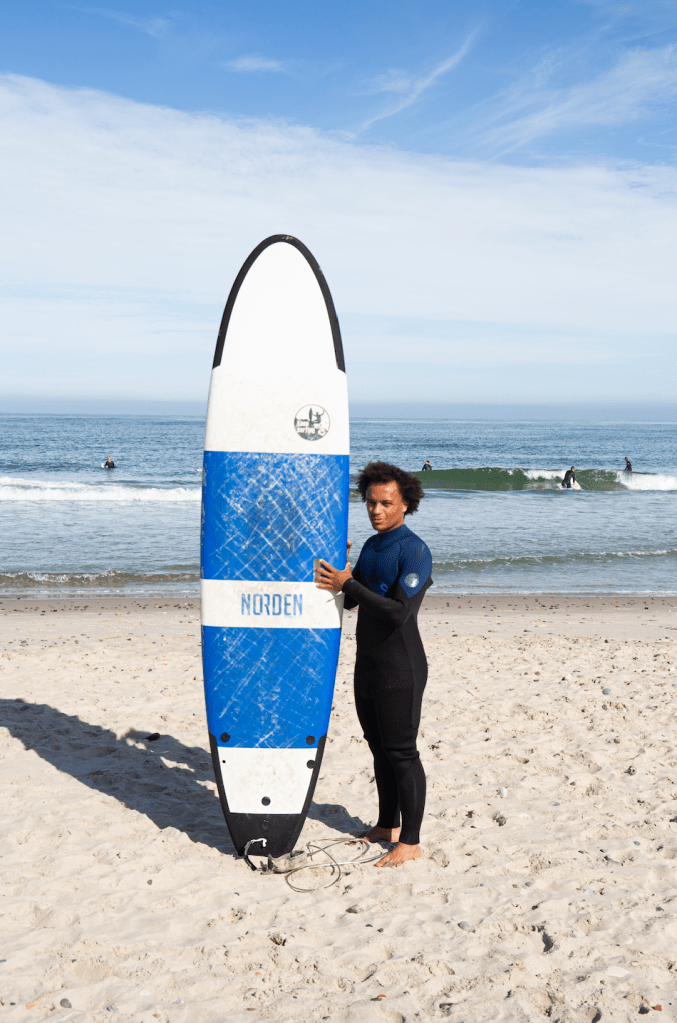
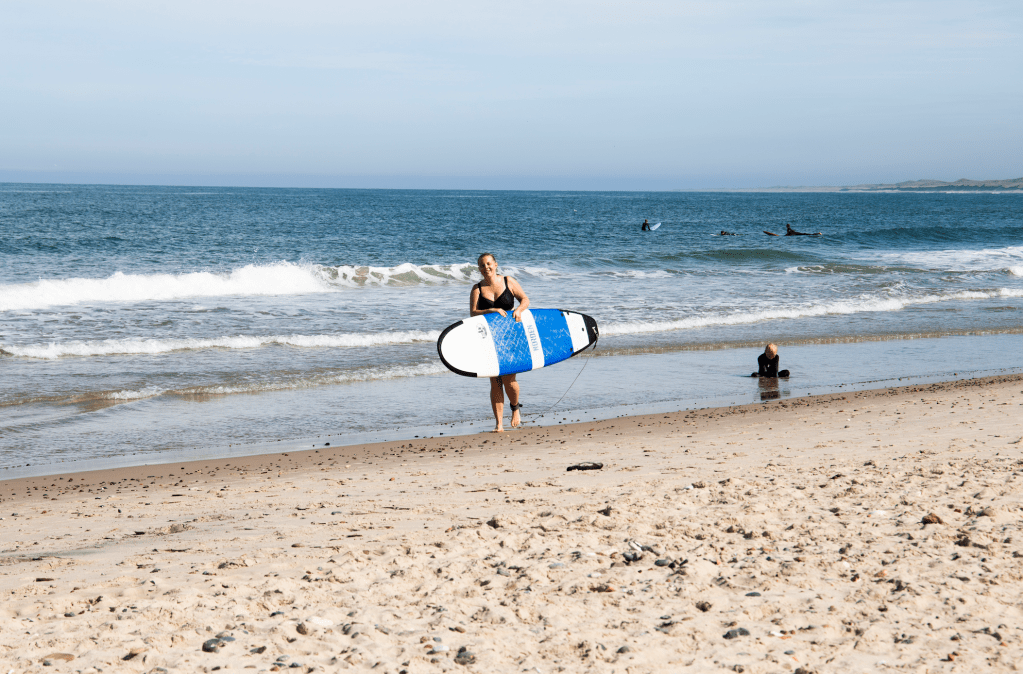
My favourite spot, when it comes to riding these north shore waves, is around the small town of Vorupør – The waves here break close to the shoreline and will roll you gently in – so a longboard is my personal preference.
Do I prefer Cold Hawaii to the real (American) Hawaii? Well, if I could surf in the latter every day of the year, I would. However, being that I live in Denmark currently, I´ll gladly take Cold Hawaii and its generous offerings, cold or otherwise.
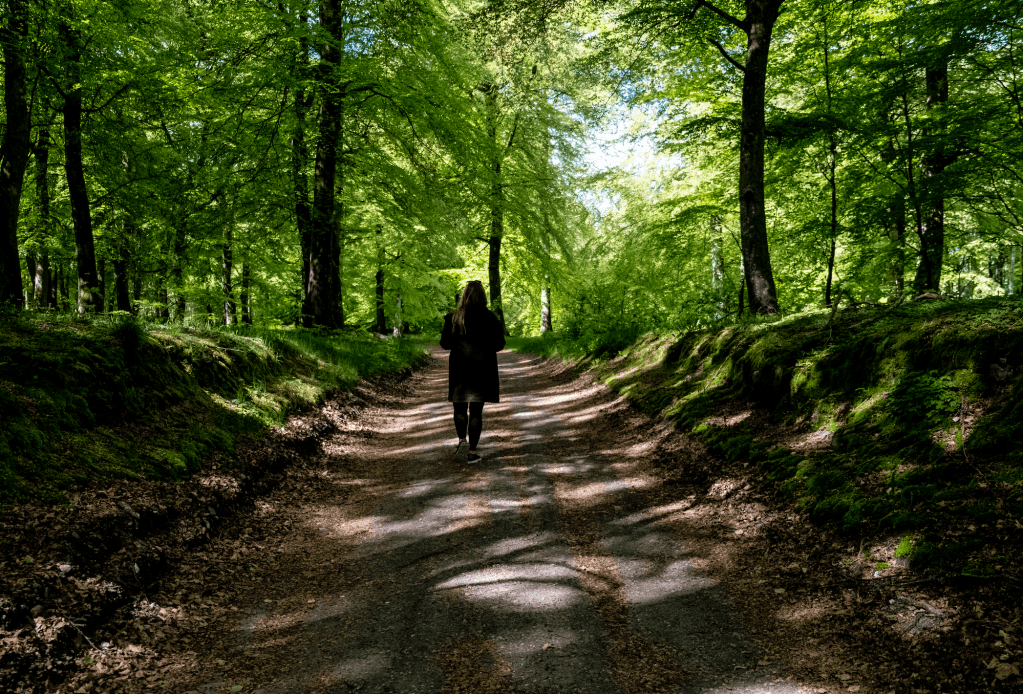
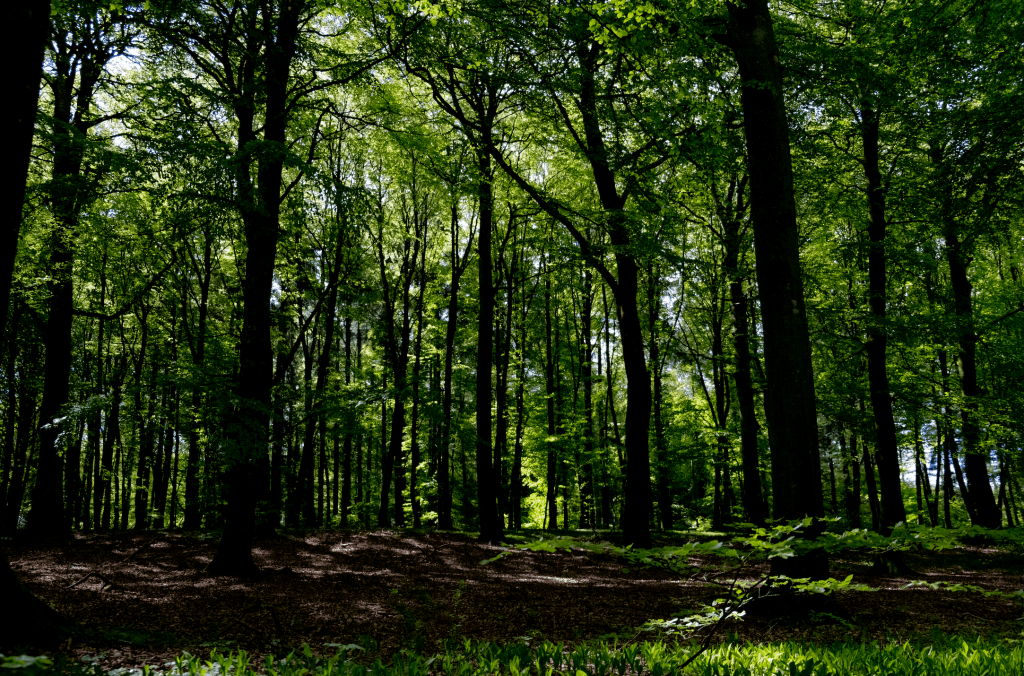
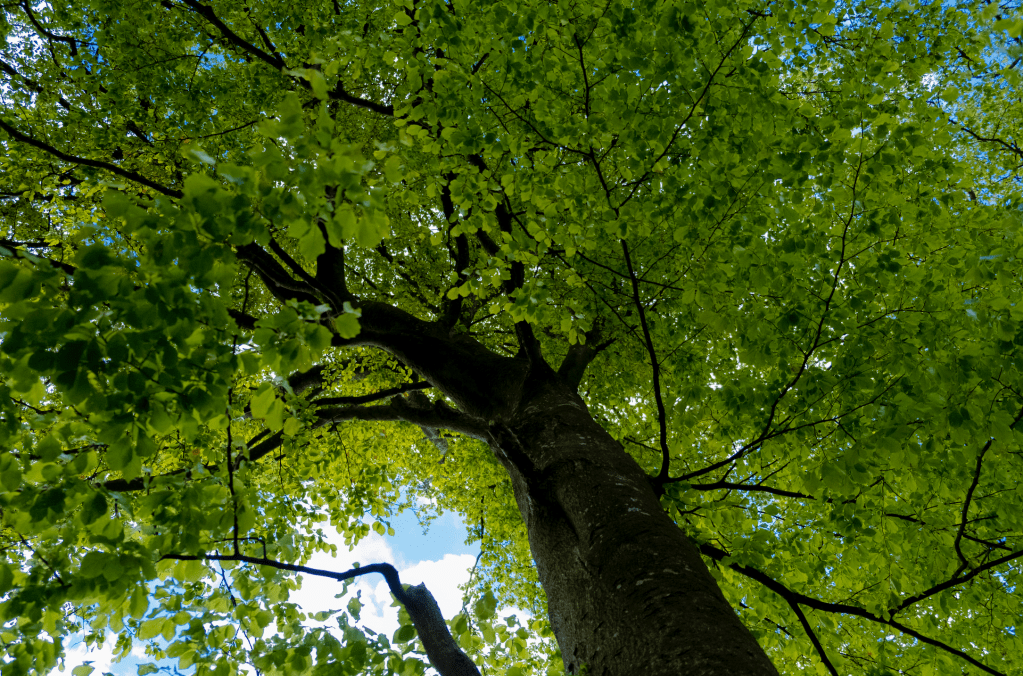
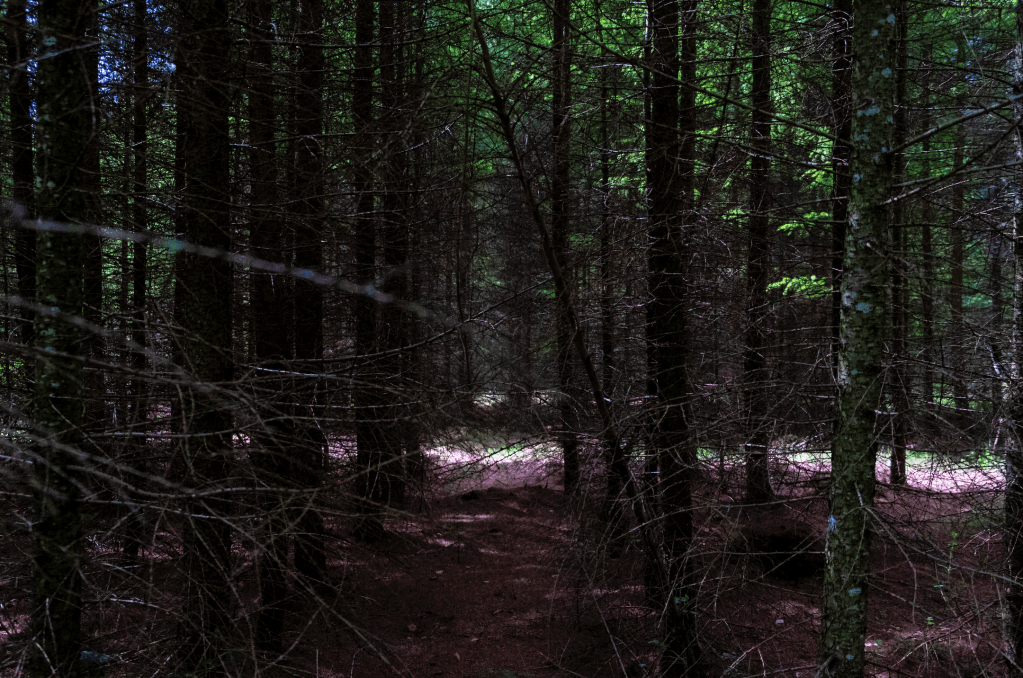
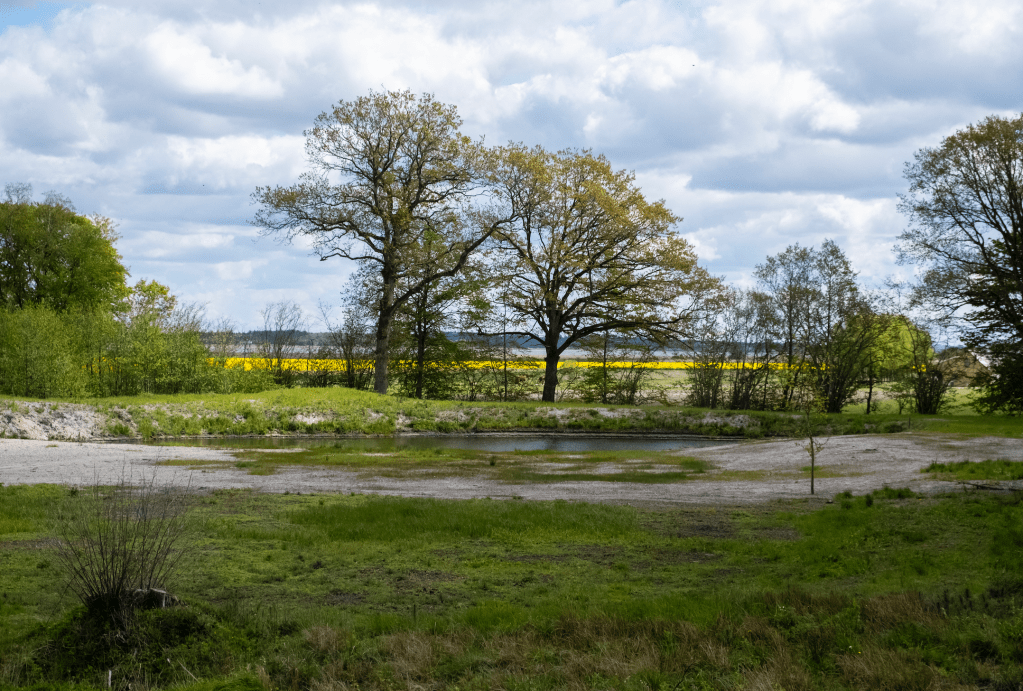
There is not shortage of leafy woods in Jutland. One of my personal favourites is Oksholm Skov, located not too far off from my base in Northern Jutland
You´ll find all manner of wildlife here, from deers to foxes, badgers and otters – though you´ll probably have to venture deeper into the woods than we did on our foray there.
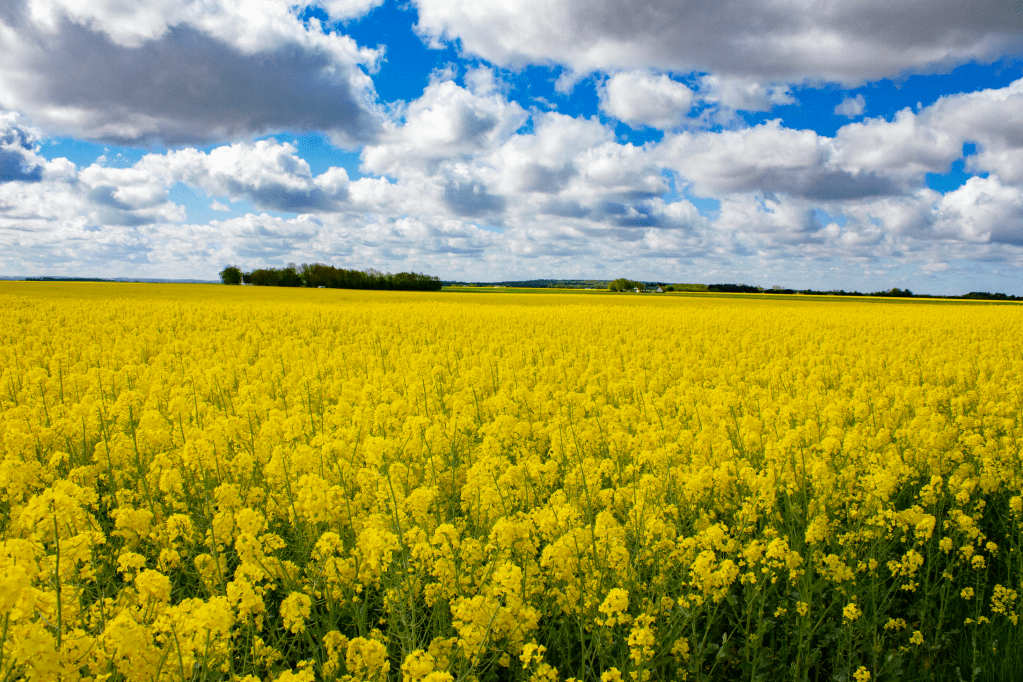
Every spring, one of my favourite things to do is to head out into the warm Danish countryside, where the rapeseed blossom is in full bloom (usually in the months of May and June.)
Rapeseed oil is one of the oldest forms of vegetable oils and can actually also be used in the production of biofuels (biodiesel.)
My advice when it comes to finding a scenic field? There are plenty of fields – get out there and enjoy em!
There is no shortage of rapeseed fields in Denmark – some of my favourite are around the small Danish town of Aabybro, near Aalborg.
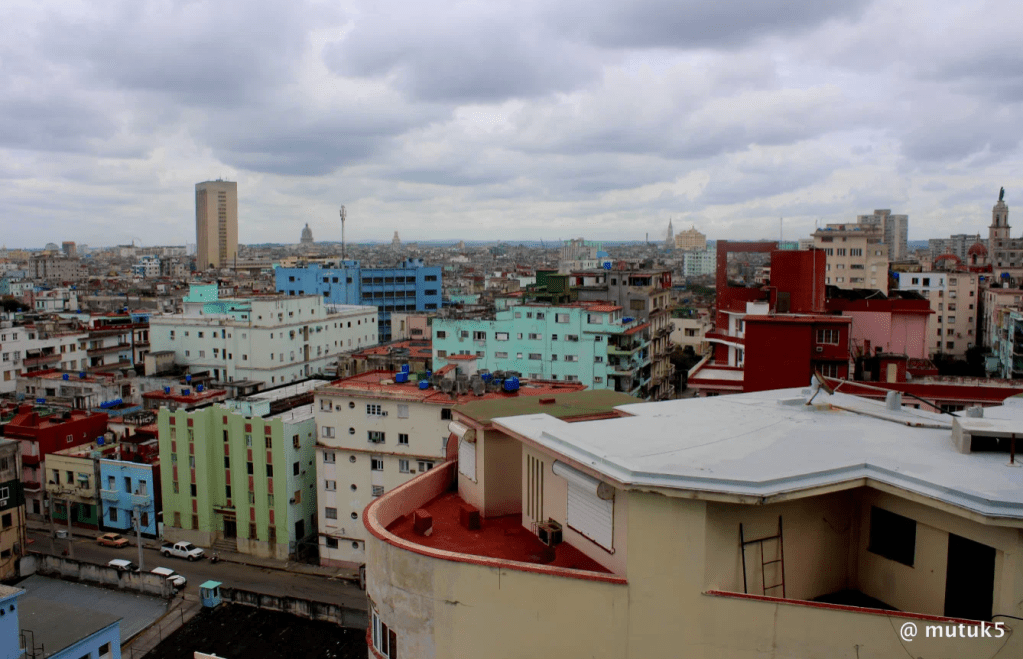
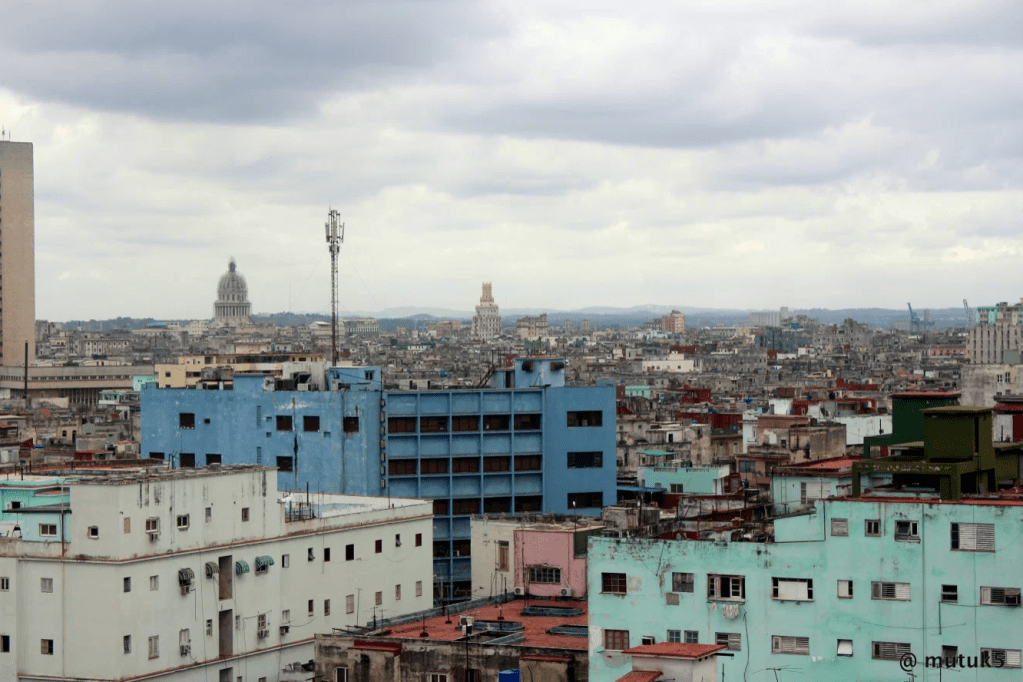
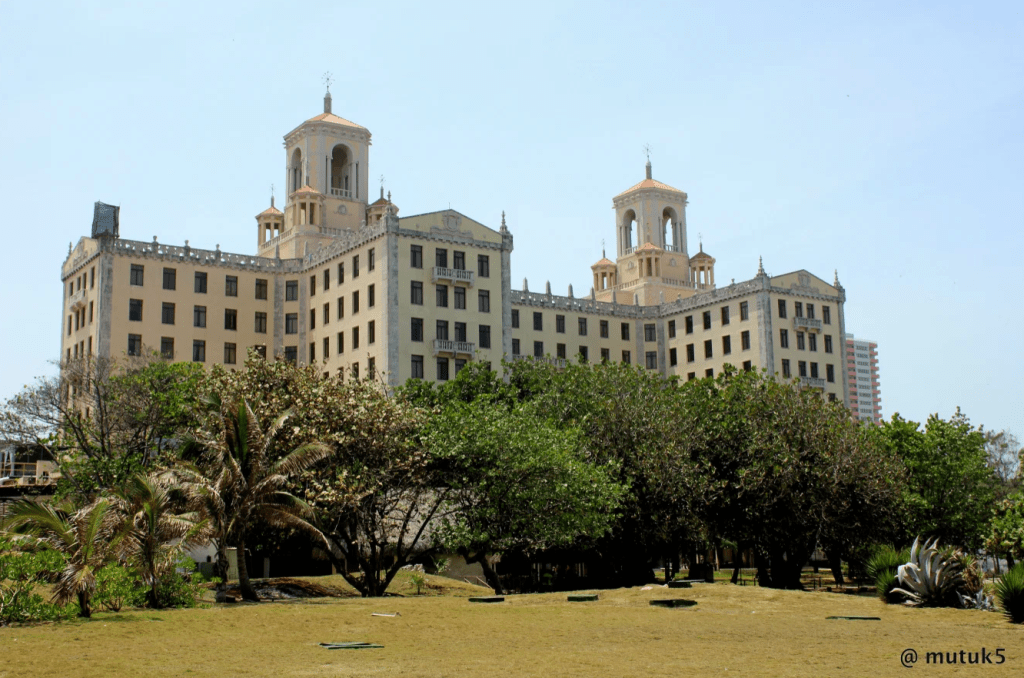
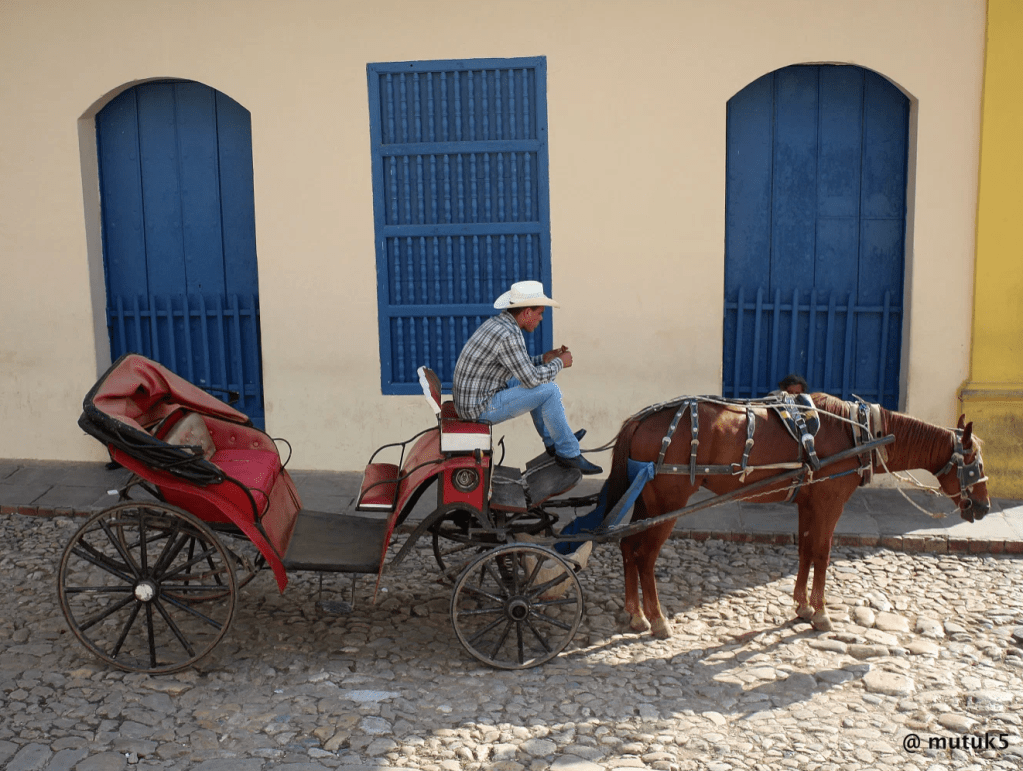
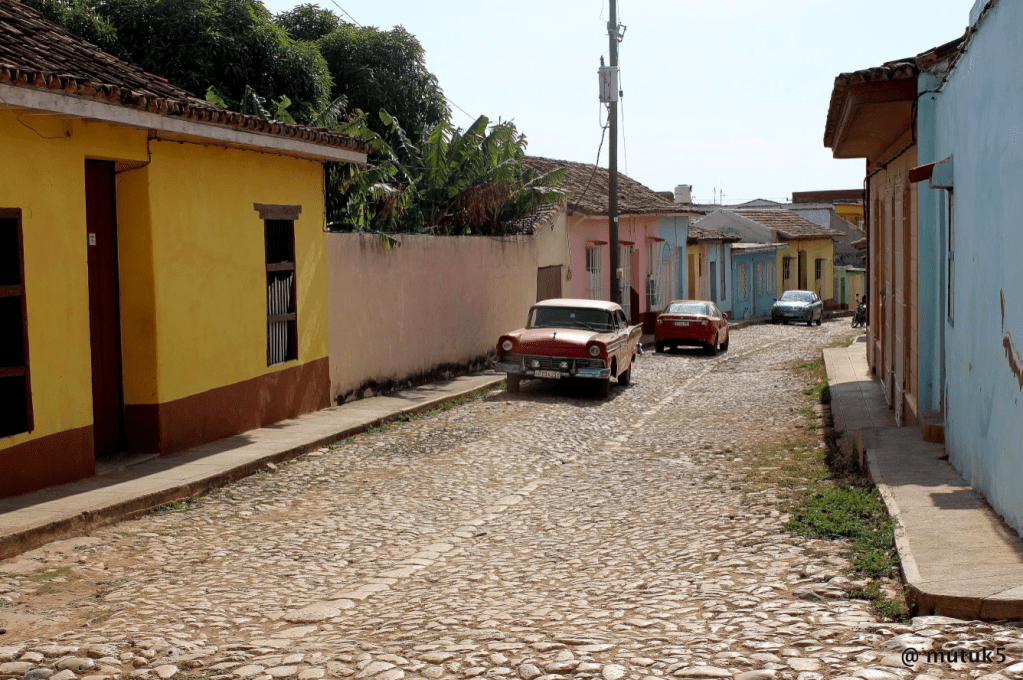
Witty, bizarre and obfuscating at the best of times, Cuba is quite possibly the most unique country I have visited. Here is a showcase of some of my photos from Cuba, along with a short video reel.
The southern Indian Ocean island nation has a mixed heritage, offering a unique blend of two continents’ cultures
Mont choisy beach at sundown
Just 14 hours away: The magical sunsets we long for in the winter time are not always as far off as one might think (all photos: Allan Kortbæk)
While destinations such as Vietnam, Thailand and Indonesia continue to top the charts when it comes to popularity, so too do some of the impacts of excess tourism in these countries, whose visitor numbers put immense pressure on local resources.
Unique combination Luckily, the world still remains vast, with a plethora of destinations to explore. Mauritius may not be the first country on your mind, when one conjures up dreamy visions of your next trip, but perhaps it should and could be a great alternative to some of the overly-visited and documented chart-topping destinations du jour.
Mauritius is a mere 14-hour or so plane ride away from Denmark (including a brief stopover in Dubai, for instance) and offers all the comforts, sun, sea, sand and amusement that the likes of Thailand and Vietnam do, albeit with far fewer crowds and a lot more charm and uniqueness.
After visiting the Seychelles earlier this year, I had high hopes for my recent trip to Mauritius and thought much of it would be a comparable experience.
In truth, the two island paradises are very different to one another. While it is true that the Seychelles is the more raw, unspoiled and quiet of the two, Mauritius brings a rich Indian heritage and well-developed infrastructure to the table, giving it the unique feel of a veritable African nation with a strong multicultural foundation.
Here is my quick guide to what to see and do in Mauritius.
Mont Choisy Beach by day
Mauritius: need to know Mauritius is a safe and stable African country in the Indian Ocean, located close to the smaller Reunion Island (which is actually one of France´s départements.)
Over 50 percent of the population are of Indian descent and you will find a compelling mix of cultures and religions here. Mauritian Creole, French and English are widely spoken by almost everyone, everywhere.
Living standards, by comparison to most other African countries, are generally high, and inequality is not as widespread as it is elsewhere on the continent.
You´ll probably fly to Sir Seewoosagur Ramgoolam International Airport in the former capital of Mahébourg.
While the main island of Mauritius is small enough for you to live anywhere on it and be able to comfortably drive from one place to another, I recommend staggering your trip into phases, allowing you to experience different areas in depth.
Renting a car and hitting the road is probably easiest, though you can also travel by taxi and, if you’re feeling adventurous, by bus.
The east of Mauritius is a great place to start your trip after you land. The area around Grand River South East is one you’ll want to visit a fair bit if you find yourself in this quadrant. Rent a boat tour via Kersley & Azur (kersleyboattours@gmail.com; +230 5756 1954) just outside Mahébourg and you´ll get to see some of the small, uninhabited coral islands of the east and ‘The Dalblair’, a 1902 shipwreck.
You’ll also have the option of sailing up the Grand River delta to the small but sweet Grand River South East waterfall. Your boat ride will also probably take you to Isle Aux Cerfs, a small island off the east coast, which is unremarkably touristy on its main beach, but much quieter further down (past the golf course).
Contrary to popular belief, it is practically impossible to walk from one end of the island to another, so check out the south side by boat if this option is available to you.
While you’re around Mahébourg, don your snorkel mask and flippers and swim in the pristine waters of Blue Bay Marine Park – one of the best snorkeling spots I have ever come across.
Recommended hotel Laguna Beach Hotel & Spa – a decent hotel that’s not too big and whose staff are extremely helpful and professional. Their buffet is scrumptious and rich in Creole delights – where possible, select the half-board option, as this gives you the benefit of breakfast and dinner included in your stay.
The view of the small harbour near Laguna Beach Hotel & Spa
The North
The North of Mauritius is more populated than the quiet east and home to some of the island’s revered beaches.
A good base would be the area around the beaches of Trou Aux Biches and Mont Choisy: two long, expansive stretches of sand on the northwest shoreline. The former has a great mix of locals and a few tourists on it and is a great sundowner spot, while the latter is also a public beach but is located at the foot of the Trou Aux Biches Beachcomber Resort and Spa, which takes some shine off it, despite the beautiful palm-fringed edge.
Further north check out the town of Grand Baie (the bazaar is a nifty spot to buy artefacts) and Perybere Beach – a favourite among the locals.
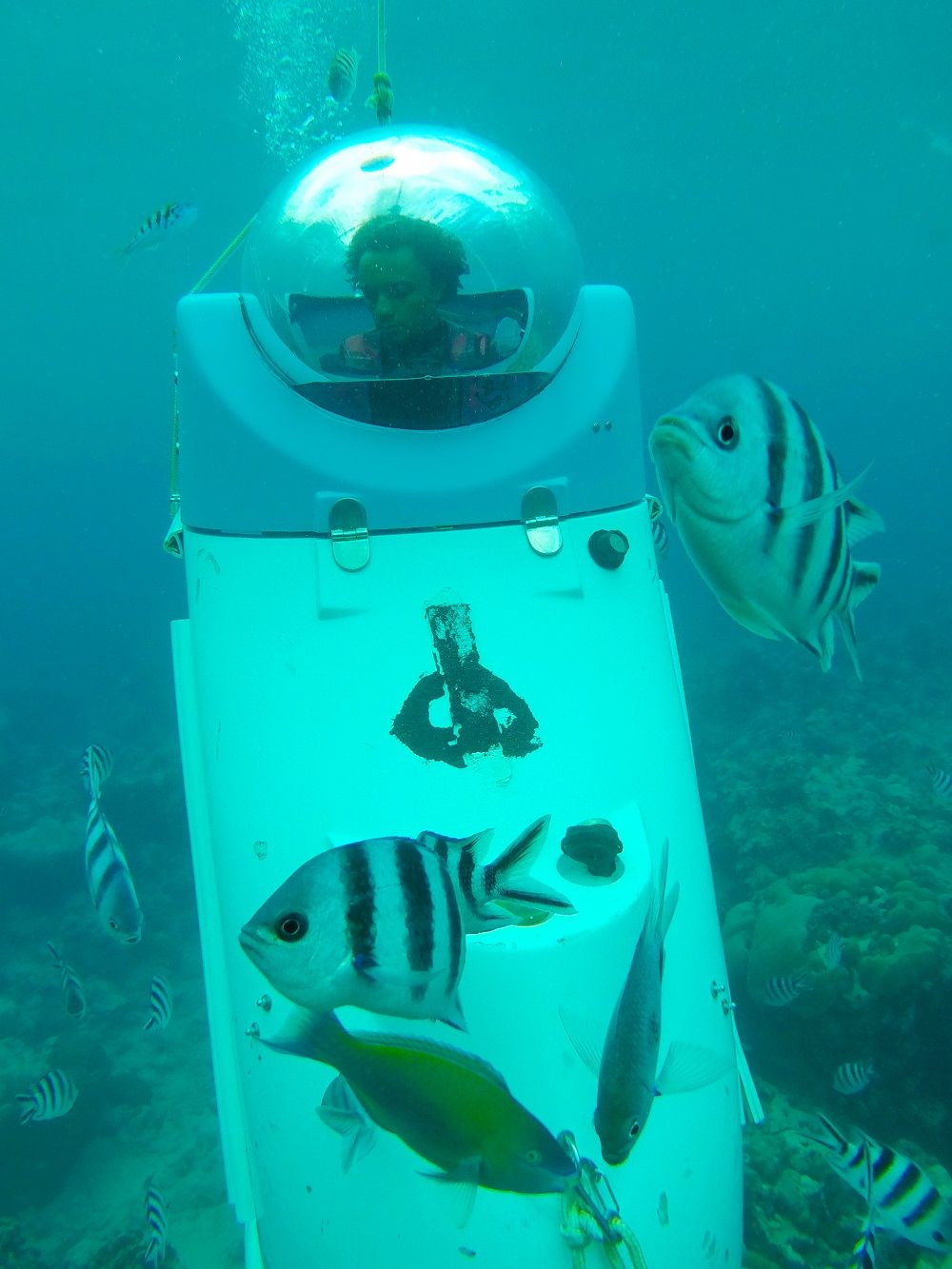
While in the north, one bucket list activity you definitely want to try is the Blue Safari sub scooter, which you will find at the northern fringe of the Trou Aux Biches beach. This three-metre dive to the ocean floor in an electric-powered underwater scooter is definitely one of the most amazing things you´ll do in your lifetime.
Blue Safari also offers a submarine service that takes you down to a depth of 35 metres in a larger craft, and this too is a memorable experience.
Recommended hotel Mystik Lifestyle Hotel – a boutique hotel with immaculately designed rooms and the famous #33 restaurant, which serves up some of the best seafood in these parts.
The epic Chamarel Falls -a must see on any trip to Mauritius
The West and the South
The vast majority of activities on your trip, depending on what you go for, will probably be in the west of Mauritius – for instance in or near the town of Flic En Flac, a great base from which to cruise the shoreline and wander south and inland.
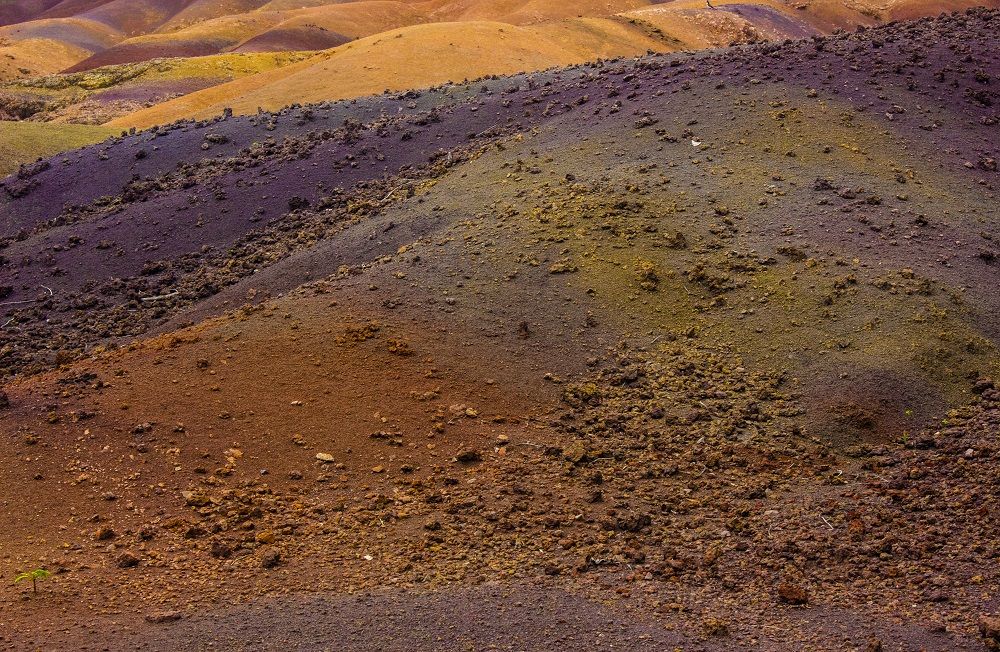
Flic En Flac is home to numerous restaurants and a comfortable stretch of beach. From here, explore the rugged interior of Mauritius with a day trip to the Black River Gorges National Park, where sights such as the iconic ‘7 Coloured Earths’, Alexandra Falls and the Chamarel Waterfall await.
Hire a taxi or up your hill-driving game as the roads here are sinuous, narrow and not for the fainthearted.
Varangue Sur Morne is a fantastic restaurant to have lunch at on your way back down from the national park. Here, you´ll find a scrumptious selection of local treats and some of the best service on the island.
For something slightly less flashy, head to Restaurant Chamarel, which is further down the slopes and offers a stunning panoramic view of the west coast from above.
If you’re into your watersports, you’ll find no shortage of them in the west and down south.
Surf on Mauritius’ rugged south coast
For stand-up paddle and kitesurfing, head to Yoaneye Kite Centre by Le Morne. The swell on the northerly section of Le Morne is regular and easy to paddle-surf on, but be careful not to drift too far downstream with the current, as getting back takes a while.
The seven colours of Chamarel – one of nature´s icons
Kitesurfing takes place further south of Le Morne, where consistent wind makes it one of the most popular spots to fly at.
As you wander further south, the coastline becomes rugged and more poignant.
Surfers looking for a good break will want to stick to the area around Le Morne, but as an alternative consider driving down the scenic beach road to the small settlement of Bel Ombre, where KiteGlobing is located – it is worth it! This is both a surf and kitesurfing hotspot.
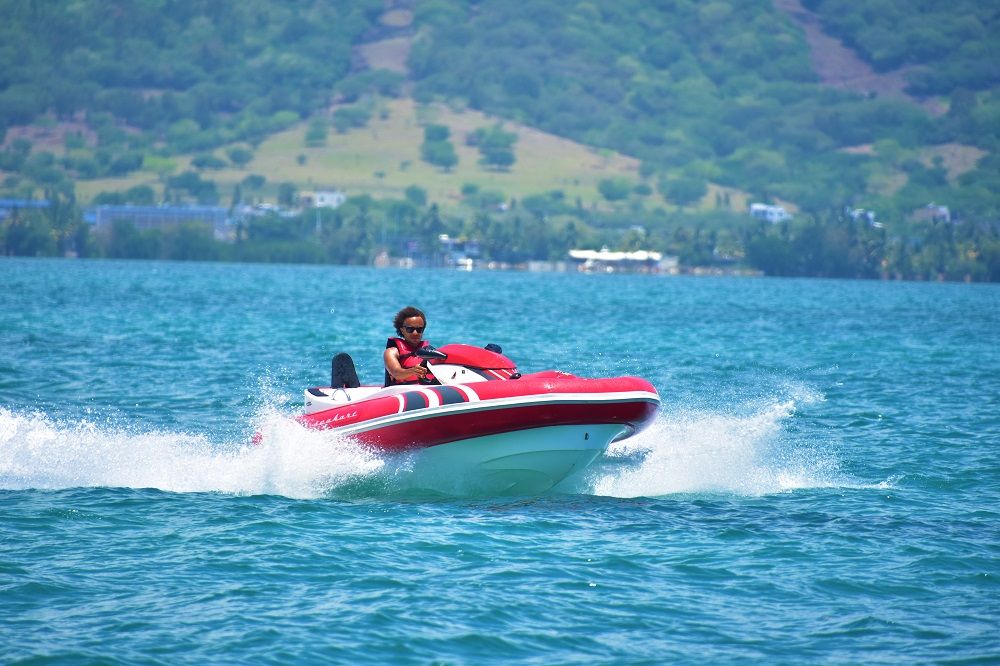
For thrill-seekers looking for a taste of adventure on the waves, Sea Kart Mauritius offers an epic opportunity for you to pilot your own 110 bhp speedboat (no boat licence required). This powerful craft skims the surface at speeds of up to 80 km/h and is the closest thing you will find to a jet ski (since these are banned in Mauritius).
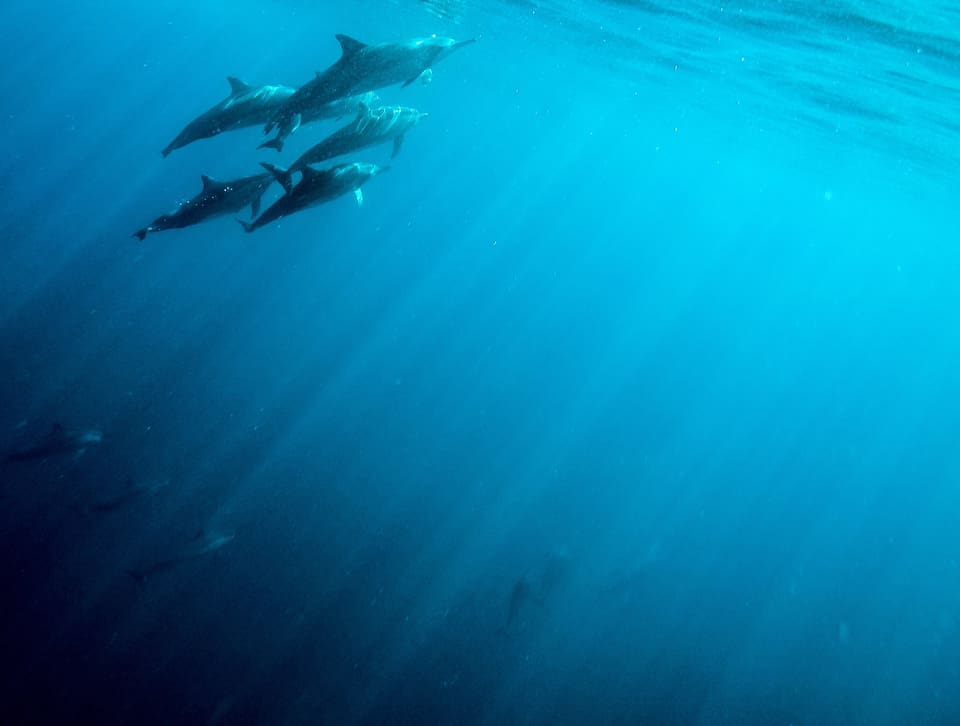
Last, but not least in the west, get yourself out of bed early and head out to spot dolphins as they surface in the morning.
Whilst among these great creatures of the deep, try not to disturb them with loud noises and splashes as they are actually sleeping (using half their brain to stay awake and the other to snooze).
Jet across the ocean in a Seakart
You’ll find numerous boat operators to cruise out to see the dolphins with, but for the sake of these creatures and their well-being, I recommend going out to see them on a stand-up paddle board, surf board or the like.
Recommended hotel The 4.5-star Villasun is located some distance away from the beach in Flic en Flac, but a free shuttle service ad libitum is available to ferry you back and forth. Some meals are available on the premises, although shopping and cooking for yourself in the state-of-the-art ensuite kitchen is the way to go.
Roskilde Festival is often touted as being a festival that “goes beyond music.” Indeed, #Rf19 has been described by its organisers as “8 days of music, activism, art, camps and freedom” and to this end, much has been done this year as in many others to create a forum to house the needs of an increasing eclectic festival that attracts a varied and demanding demographic.
Central to this is Roskilde´s arts programme, which tends to create novel, inventive forms of creative expression, which this year, manifested themselves most clearly (we feel) via the House of Chroma and Ambereum areas, both of which combine colour, aesthetics and other elements of performative design.
The Modern Festival Narrative
Whether these areas have been sculpted in response to the likes of festivals such as Heartland zoning in on creating powerful manifestations of creative dialogues that do veritable justice to the “beyond music” intent or whether they emanate from the demands of an increasingly diverse, increasingly aware audience demographic is debatable. What´s not, however, is the future of spaces such as these in the festival narrative, particularly at an event such as Roskilde, which faces the unparalleled challenge of moulding a festival that responds to the increasingly obvious challenges of the world today and the generations to come.
This said, balancing multiple stakeholder interests and ensuring each gets adequate representation in such fora is always going to be a next-to-impossible task and invariably, there is a big difference between intent and actuality. Let´s have a closer look at how the shared spaces of House of Chroma and Ambereum fared against their expectations this year.
House of Chroma – Performances, Workshops, Music
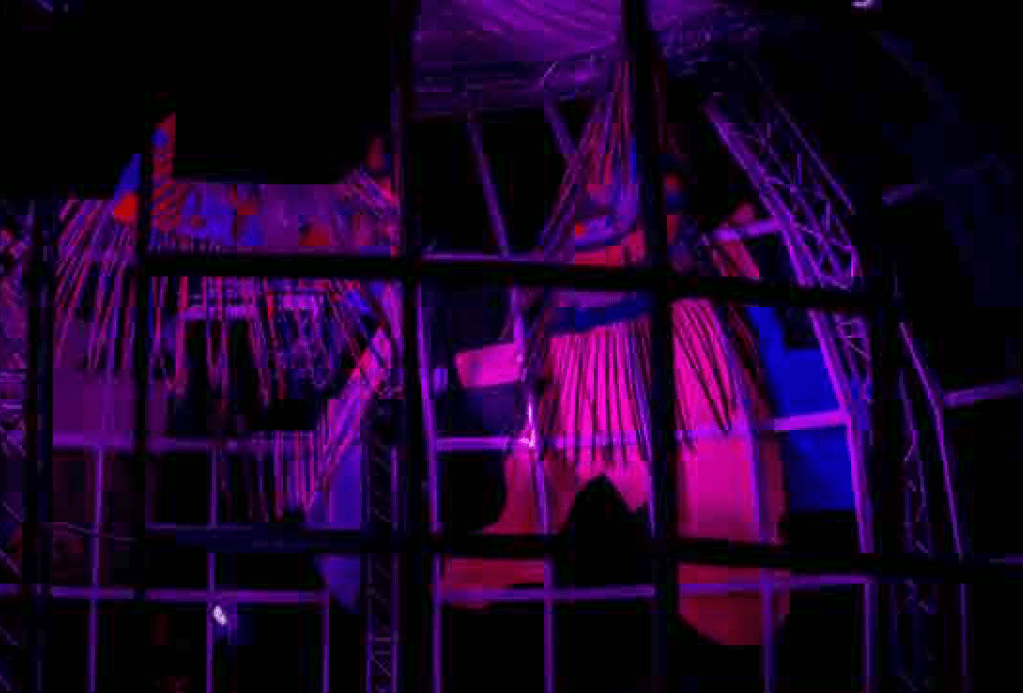
House of Chroma loaned a page from the Buckminster Fuller inspired Dome of Visions concept and with it, the intent to create a liminal space in which ideas, debates, workshop and music could flow freely. The throbbing epicenter of the art scene, the dome was designed by the Brazilian artist Eli Subrack (also known as Avaf – Assume Vivid Astro Focus,) and like other works by him, explosions and accentuations of colour feature prominently as a dynamo for creative expression.
And what better way to manifest the qualities of such a space than for Eli to invite his pals from the Brazilian Queer Resistance Movement to declare the house open on Wednesday? Using exaggerated, intense expressions of the body amidst a backdrop of theatrical voices and electronic music, the Brazilians wove a tapestry that connected their inconceivable reality with that of an imbibed, privileged but nonetheless curious audience.
Despite this indefatigably vivid opening, House of Chroma was also as much about the familiar everyday and not merely the inconceivable extreme – familiarized. Activism and its new facades were explored comprehensively and in a matter-of-fact manner by a sit-down with the 2011 Occupy Wall Street co-founder, Micah White, ambient soundscapes were created by the Danish musician, Sofie Birch and Norwegian Sissel Toolas took us on an olfactory journey of 50 scents gathered over 30 years of research.
And there was more – rap music as a vehicle for green climate activism in the form of a workshop and subsequent rap battle hosted by the NGO, Rapolitics, spoke directly to the hearts and states of mind of Roskilde´s millennially-influenced audience and the Girls Are Awesome movement also made a House of Chroma appearance that went beyond the obvious discussion of on-stage female empowerment, focusing instead on what happens behind the scenes, through a talk with Karen Vincent from SheCanPlay, Jenny Rossander from Lydmor and sound engineer Jessica Petersen from Roskilde Festival.
Sensory Experimentation
Indeed, each House of Chroma happening managed to pull of the rare feat of being exceptionally distinct in composition and execution – often appealing to multiple senses and at times, zoning in on one, as was the case with Sissel Toolas’s olfactory journey.
If we speak of a future in which we must harness our collective energies to re-think the challenge of creating sustainable change, it is clear that we must also go beyond what we can see and hear and as such, sensory bombardments that speak to other ways of seeing and experiencing reality make for a potentially powerful agent of change. House of Chroma may not have set the Roskilde world alight as far as this goes but as a bare minimum it provided a space in which room to think differently and participatorily if only within the realms of a plastic dome draped in psychedelic colours.
Ambereum: Vivid space with room for one´s imagination to wander
If House of Chroma was the capital of the Art Zone, Ambereum was the second city that quite often outwitted its larger counterpart, whether by accident or design. Where House of Chroma´s dome crammed varied influences together into a creative space that at times felt crammed or constricted, Ambereum was more spacious and less intense.
Described as “an area for DJ´s, art, relaxation and raves,” the Orange and yellow-walled ambient space hosted performances and sensory discoveries by day such as the fun-sounding yet anti-climatic Japanese artist, Tomoko Sauvage, whose use of water in ceramic bowls as an instrument concept flattered to deceive.
By night (from Thursday through to Saturday,) the area morphed into a nightclub-esque metropolis, under the auspices of Berlin-infused electronic music, courtesy of artists such as Boris, Roi Perez, Virginia and others. This set up that worked quite well and stood in stark contrast to the more laidback nature of the space during the day.
All in all, Ambereum´s relaxed confines provided a comfortable, if not soothing space for festivalgoers young and old to relax and dream in and this only adds to the festival narrative, particularly given the sheer size and cleanliness of the area.
Beyond Music: a Narrative for Change – Today and in the Future
In tandem with House of Chroma, Ambereum managed to create a creative forum that appealed to the beyond music intent that the festival organisers are focusing their efforts on with greater intensity. While their execution could have been more refined, more varied and perhaps even more accessible, there can be no doubt that there was more focus on the arts as a central component of the festival narrative this year.
As the festival struggles, as the world around it, to adapt to the demands of creating a more sustainable society, there can be no doubt that creating a narrative that fosters creative dialogues that go beyond the mere consumption of musical performances is one way to lead the charge.







































 Kortbæk_Travels